A small kitchen becomes frustrating when everyday tasks require moving several things first. You reach for a pan, lift a stack of lids, shift a mixing bowl, and finally find what you need. The goal of organizing is to remove those extra steps.
You do not need matching containers to begin. Work with one drawer or cabinet at a time, keep the useful items, and test a new arrangement before buying anything. These ideas are designed to help you cook and clean more comfortably in the space you have.
Start with the way you actually cook
Before reorganizing, notice your next ordinary meal. Where do you chop? Which drawer do you open repeatedly? What lands on the counter because putting it away takes too much effort?
Write down three friction points. For example: “The cutting boards fall over,” “I cannot find the lid,” and “The counter beside the sink stays covered.” Choose ideas below that address those problems first.
Make your cabinets easier to use
1. Put everyday dishes near the dishwasher
Move frequently used plates, bowls, and glasses to a cabinet that is easy to reach from the dishwasher or drying area. If two people usually unload together, leave room for both to move without blocking each other.
An occasional-use serving platter does not need the easiest shelf. Give that space to the dishes you return every day.
2. Create a cooking zone
Keep your most-used pan, spatula, and cooking spoon close to the preparation and cooking area. Store items in adjacent drawers or cabinets rather than directly over heat or steam.
A useful test: can you take out your main pan without removing another one? If not, reduce the stack or move less-used cookware elsewhere.
3. Store trays and cutting boards upright
Use an existing narrow cupboard or a stable divider to keep baking sheets and cutting boards on their edges. Separate heavy boards so pulling out one does not topple the others.
Measure the cabinet opening, including its hinges, before choosing a rack. Leave enough room to grip each item at the front. A rack that technically fits but prevents you from lifting a tray out will not help.
4. Give pot lids a defined place
Choose one lid-storage method: a shallow drawer, a stable vertical divider, or a small section beside the matching pans. Avoid a loose pile where every lid slides to the bottom.
Keep only lids that fit cookware you still use. If you store a lid with its pan, check that you can lift both safely without balancing another stack.
5. Use shelf height deliberately
A tall cabinet often wastes the space above short mugs or bowls. An adjustable shelf or sturdy shelf riser can create a second level without requiring tall stacks.
Check the shelf and organizer load limits. Put heavier items low, and leave finger room above the tallest item. More shelves are useful only if you can remove the contents comfortably.
Reclaim the drawers and counters
6. Edit the utensil drawer by task
Empty one drawer onto a towel. Sort tools into preparation, cooking, baking, and serving. Keep the tools you regularly use in the easiest drawer, with occasional baking tools elsewhere.
Use a small box or existing tray as a temporary divider. After a week, check which tools actually earned that convenient space.
7. Leave one preparation area clear
Choose a stretch of counter for chopping and assembly. Keep only the items needed for that job there, such as a cutting board when it is in use.
Do not solve a crowded counter by moving appliances to an unstable perch. Store an occasional-use appliance in a cabinet only if you can lift it safely and its cord remains accessible.
8. Keep the sink edge simple
Limit the sink area to daily washing essentials. Put backup sponges, unopened detergent, and rarely used cleaning supplies in a separate place.
A small washable tray can define the boundary, but avoid trapping water underneath. Dry the area regularly. For a deeper plan, use our under-sink storage guide.
9. Make one small “in use” container
If tea, coffee, or packed lunches create several loose packets, give that activity one small container. Keep only the current supply there and place extras in the pantry.
The container should make the routine easier to start and finish. If it becomes a second junk drawer, narrow the category rather than adding a larger bin.
10. Move paper out of the kitchen work zone
Recipes, school notes, and mail can occupy the most useful counter. Choose a separate landing place away from food preparation, heat, and splashes.
A single folder may be enough. Set a regular time to deal with its contents so the folder does not simply conceal an expanding pile.
Make overlooked space work sensibly
11. Use cabinet doors only where clearance allows
A lightweight door-mounted holder can work for a cloth or small supplies, but first close the door with an empty holder in place. Hinges, shelves, and plumbing may occupy the same space.
Check the mounting instructions, door thickness, and weight limit. Renters should check the lease before drilling or applying adhesives that could damage the finish.
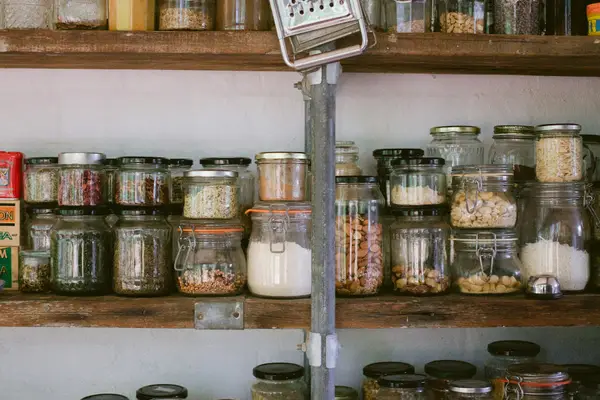
12. Group pantry ingredients by use
Breakfast foods, baking ingredients, and dinner staples are easier to find when each group has a defined home. You can make these zones with the packaging you already have.
Keep an accessible “use first” area for food approaching the date shown on its package. Our small pantry guide explains how to build zones without buying a full container set.
13. Keep heavy items within comfortable reach
Store heavy cookware and bulky appliances where you can lift them with control, usually on a lower accessible shelf. High cabinets are better reserved for light items you rarely need.
Do not climb on chairs or countertops to reach storage. Use a stable step stool according to its instructions and keep access clear.
14. Avoid filling every available gap
Leave breathing room around handles, stacks, and bins. A packed shelf may hold more, but it is harder to use and harder to reset after a busy evening.
For example, leave space to slide your hand beside a mixing bowl. If taking out one object dislodges two others, the arrangement needs fewer items or a different layout.
15. End with a short evening reset
Choose a repeatable sequence: put tools back, clear the preparation space, and return stray pantry items to their zones. Keep the routine small enough to do after an ordinary dinner.
If something repeatedly stays out, ask why. Its storage may be too high, too crowded, or too far from where you use it. Change the home of the object before blaming the habit.
A realistic first weekend plan
Start with the utensil drawer and the cabinet you open most often. Remove what does not belong, clean the empty surfaces, then arrange daily items where they are easiest to reach.
Use the layout for several meals. Only then measure for a divider or shelf riser if a specific problem remains. Reorganizing the whole kitchen at once can leave you with a bigger mess and no clear stopping point.
Frequently asked questions
What should I organize first in a small kitchen?
Start where a daily task gets interrupted. That might be the drawer that jams or the pan cabinet you must unpack each night. Improving one frequently used area usually makes a bigger practical difference than tidying a rarely opened shelf.
Do I need matching storage containers?
No. Consistent zones and easy access matter more than matching containers. Buy a container only after identifying what it will hold, where it will go, and how it will solve the problem.
Where should I keep extra supplies?
Keep a modest backup supply in a clearly defined pantry or cabinet zone. If your cupboards cannot hold both everyday items and bulk extras, reconsider the quantity you buy. Explore more small-space organization ideas as you refine the system.
Keep a little inspiration
Save this guide for later.
Make a note of the ideas you want to try next.
Save to Pinterest (opens in a new tab)